Trump Signs "Big and Beautiful" Act, Hitting New - energy IndustryTrump Signs "Big and Beautiful" Act, Hitting New - energy Industry
Amazon Hits 1 Million Robots, Launches DeepFleet AI to Revolutionize Logistics with "Second-Level Response"Amazon Hits 1 Million Robots, Launches DeepFleet AI to Revolutionize Logistics with "Second-Level Response"
EU - US Trade Talks Stalled, European Economic Data Under PressureEU - US Trade Talks Stalled, European Economic Data Under Pressure
European Stocks Rally on July 9, STOXX 600 Hits Four-Week HighEuropean Stocks Rally on July 9, STOXX 600 Hits Four-Week High
Fed Minutes Boost Rate Cut Hopes; Nvidia Briefly Tops $4 Trillion Market CapFed Minutes Boost Rate Cut Hopes; Nvidia Briefly Tops $4 Trillion Market CapU.S. stocks rallied broadly on Wednesday, July 10, with the tech-heavy Nasdaq hitting a record high. The surge followed the Federal Reserve’s meeting minutes reinforcing expectations of rate cuts this year and Nvidia’s brief ascent to a $4 trillion market valuation.
FTSE 100 Edges Up 0.2% on July 9 as Markets Digest U.S. Tariff ExpansionFTSE 100 Edges Up 0.2% on July 9 as Markets Digest U.S. Tariff ExpansionLondon’s FTSE 100 inched up 0.2% on July 9, with investors continuing to absorb the impact of U.S. tariff expansions. Advertising giant WPP (WPP.L) plunged 19%—its worst daily drop in over three decades—after slashing profit forecasts due to key client losses and shrinking new business, weighing heavily on the index.
U.S. House Passes First Major Crypto Industry Regulation BillsU.S. House Passes First Major Crypto Industry Regulation BillsThe U.S. House of Representatives passed the Genius Act on July 17, sending it to President Trump for signature. This marks the first U.S. regulatory framework for dollar-backed crypto stablecoins. The House also approved two other crypto bills the same day.
BOJ Warns of Food Price-Driven Inflation; U.S. Tariffs Could Severely Hurt Japan's GDPBOJ Warns of Food Price-Driven Inflation; U.S. Tariffs Could Severely Hurt Japan's GDPBank of Japan board member Junko Kotani warned on July 9 that surging prices of rice and other foodstuffs are intensifying inflationary pressures, urging vigilance against "second-round effects" that might lift household inflation expectations. Japan’s consumer inflation remains around 3%, but the BOJ’s weighted median inflation gauge—closely watched by policymakers—still lags below the 2% target. Kotani noted economic uncertainty makes it premature to pinpoint the next rate hike, with food prices a critical variable.
New Zealand Central Bank Pauses Rate Cuts as Recession Risks LoomNew Zealand Central Bank Pauses Rate Cuts as Recession Risks LoomOn July 9, the Reserve Bank of New Zealand (RBNZ) kept the Official Cash Rate (OCR) steady at 3.25%, in line with market expectations. This pause brings an end to six consecutive rate cuts since August 2023, during which the rate was slashed by a cumulative 225 basis points.
Trump Tariffs Jolt Australian Stocks; Gold Mining Sector Leads DeclinesTrump Tariffs Jolt Australian Stocks; Gold Mining Sector Leads DeclinesAustralia’s stock market fell across the board on July 9, with the S&P/ASX 200 dropping 0.61% to 8,538.6 points. Markets reeled after Trump announced plans to impose 50% tariffs on imported copper (effective as early as late July) and 200% on pharmaceuticals, triggering a 13.1% daily surge in copper prices—their biggest jump since 1989.
Canada's S&P/TSX Rises 0.35% as Real Estate Leads, Tariff Impact MutedCanada's S&P/TSX Rises 0.35% as Real Estate Leads, Tariff Impact MutedCanada’s S&P/TSX Composite Index ended a two-day slide, edging up 0.35% to 26,998.66 on July 9, with real estate stocks leading gains. Markets reacted divergently to Trump’s 50% copper tariff plan (effective as early as late July) and extended trade talks to August 1: the real estate index (.GSPTTRE) rose 0.5% on H&R REIT’s (HR_u.TO) 4.7% surge amid Blackstone acquisition talks.
Ireland Revises Q1 GDP Down, Germany’s Exports Slide on U.S. Tariff ShiftsIreland Revises Q1 GDP Down, Germany’s Exports Slide on U.S. Tariff ShiftsIreland’s CSO sharply revised Q1 GDP growth on July 8: annual expansion was cut to 7.4% from 9.7%, as surging U.S. pharmaceutical exports faded. The more indicative Modified Domestic Demand (MDD) was revised up to 2.0% from 0.8%, though 2024 full-year MDD growth was trimmed to 1.8% from 2.7%. GNI*, stripping multinationals’ distortions, showed 4.8% 2024 growth, highlighting GDP’s skew from cross-border capital flows.
Japan's Corporate Bankruptcies Hit 11-Year Half-Year High, Pressures MountJapan's Corporate Bankruptcies Hit 11-Year Half-Year High, Pressures MountJapan saw 4,990 corporate bankruptcies in H1 2025, up 1.19% year-on-year and the highest H1 tally since 2014. Small businesses bore the brunt: 172 firms collapsed directly due to labor shortages—a record—with 89.8% of failed companies employing fewer than 10 people. They faced a vicious cycle: forced to raise wages but unable to absorb costs, widening the "pay gap" with large corporations.
Auckland CBD Retail Vacancy Hits 13%, Triple Wellington’s Rate Amid Mixed PressuresAuckland CBD Retail Vacancy Hits 13%, Triple Wellington’s Rate Amid Mixed PressuresAuckland’s downtown retail vacancy rate stands at 13%, nearly three times Wellington’s 5.3%, driven by overlapping factors. Oversupply plagues areas like Newmarket post-Westfield mall opening, requiring time to absorb excess space, while hybrid work models reduce foot traffic in the city center.
Australian Business Conditions Surge to 1-Year High, Offset by U.S. Tariff RisksAustralian Business Conditions Surge to 1-Year High, Offset by U.S. Tariff RisksAustralia’s business environment improved sharply in June, with NAB’s Business Conditions Index jumping 9 points to a 13-month peak on July 9, while confidence rose for the third straight month (+3 points). All key metrics strengthened: sales surged 10 points, profitability gained 9 points, and employment edged up 2 points. Capacity utilization hit 83.3%, with future orders climbing 2 points, signaling a shift from early-year weakness and stronger second-half momentum, noted NAB’s Australian Economics Head Gareth Spence.
Canada's June Ivey PMI Rises to 4-Month High; Rental Market Cools UnevenlyCanada's June Ivey PMI Rises to 4-Month High; Rental Market Cools UnevenlyCanada’s Ivey PMI climbed to 53.3 in June, a four-month high, signaling accelerating economic activity. However, underlying concerns emerged: the employment sub-index dipped below 50 (49.5), while the price index surged to 70.2, highlighting mounting inflation pressures.
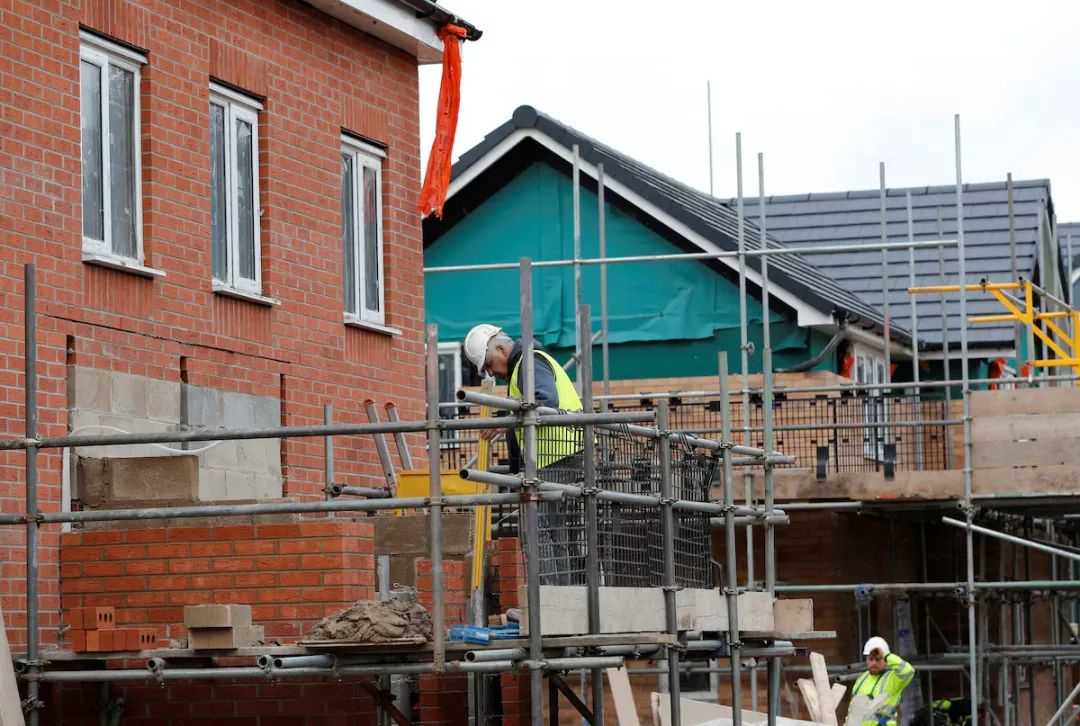
UK House Prices Stabilize; Corporate Investment Shifts Toward BritainUK House Prices Stabilize; Corporate Investment Shifts Toward BritainUK house prices showed signs of stabilization in June, with Halifax data recording zero month-on-month growth (previous figure revised up to -0.3%) and annual gains edging down to 2.5%. While April’s stamp duty hike dampened activity—prices are slightly lower than late 2023—mortgage rates have fallen to their lowest since 2023. Halifax Mortgages Director Amanda Bladen noted wage growth is supporting market resilience, with two rate cuts expected this year likely to drive modest price recoveries in H2.
UK Stocks Trade Sideways; Energy Sector Under PressureUK Stocks Trade Sideways; Energy Sector Under PressureLondon’s stock markets saw mixed trading on July 7, with the FTSE 100 flat and the FTSE 250 mid-cap index edging up 0.2%, as focus remained on the U.S. delaying tariff implementation to August 1 and progress in trade talks.
RBNZ Likely to Pause Rate Cuts This Week; Economic Outlook Faces PressuresRBNZ Likely to Pause Rate Cuts This Week; Economic Outlook Faces PressuresNew Zealand’s Reserve Bank (RBNZ) is expected to keep the Official Cash Rate (OCR) unchanged at 3.25% on July 10, pausing its streak of six consecutive rate cuts since August 2024. Market expectations for a cut this week stand at just 15%, though most forecasts anticipate 25–50 basis points of easing by November. ANZ Bank holds a differing view, assigning a 40% probability of a cut and projecting cumulative 75 basis points of reductions by February 2025, bringing the OCR to 2.5%.
Plummeting International Student Numbers in Australia Raise Labor Shortage Fears; RBA Rate Cut ImminentPlummeting International Student Numbers in Australia Raise Labor Shortage Fears; RBA Rate Cut ImminentAustralia is grappling with a sharp decline in international students, triggering concerns over labor market gaps. As of April 2025, the total number of international students dropped to 794,000, a decrease of 300,000 from the end of 2024. New enrollments plummeted 13% year-on-year to 219,000, while visa applications fell by over 30%. This is largely attributed to successive policy tightenings: visa fees were hiked twice in a year (from A$710 to A$1,600, then to A$2,000); English proficiency and financial proof requirements were raised